jeudi 30 décembre 2021

Les Personnalités de l'année 2021

Click on the dropdown button to translate.

Translate this page:

You can translate the content of this page by selecting a language in the select box.

Vous pouver traduire cet article dans la langue de votre choix dans la case de selection


Les Personnalités de l’année 2021

 Haïti Connexion s’est forgé une tradition depuis des années qui consiste à choisir des personnalités de l’année selon des critères de popularité, d’actions, de réalisation ou de charisme.  Cette initiative a été depuis reproduite par d’autres agences de presse. Les choix des personnalités, par endroit éditorialisés, sont inspirés des évènements de l’année qui ont marqué l’actualité dans le bon comme dans le mauvais sens, C'est à vous de juger.  Les personnalités de l’année 2021 sont :

 Le Président Joe Biden

 – Après le départ du président controversé Donald Trump qui avait incité ses partisans à marcher sur le bâtiment du Capitole moins d’une heure avant que la foule n’envahisse les lieux,  le choix de Joe Biden paraissait une alternative au désordre et au choc laissés par un président ayant violé la constitution de son propre pays.   Il apparait que la maison Blanche est investie d’un nouveau président complètement étranger à celui qui s’était présenté comme candidat.  Le contraste est tellement choquant qu’on se croit revivre l’ère des périodes noires du totalitarisme.  On ne reconnait plus le président qui accumule défaite en défaite.   Du Chaos en Afghanistan, de la quatrième vague de la pandémie et d’une inflation galopante : la cote de popularité du président démocrate ne cesse de chuter un an après son élection.  Le président Joe Biden a permis de voir le parti démocrate sous son vrai œil. La façon dont il a géré les dossiers politiques et en particulier la pandémie n’a fait que décrédibiliser le parti démocrate.  A cause de son approche totalitaire et des gaffes de toutes sortes dans ses discours, Le président est affaibli par son propre camp divisé au sein du Congrès.  Il a fait des déçus et on peut conclure que sa cote de popularité a atteint un creux historique presqu’au même niveau que son prédécesseur.


Feu Président Jovenel Moise :

Alors que tout a été programmé, manigancé et planifié pour que le président Jovenel Moise n’achève pas son mandat par tous secteurs azimut et une frange de la population manipulée par les mêmes petits groupes, le pays est tombé dans une désolation plutôt étonnante devant ce crime odieux dont jusqu’ici, après 5 mois, l’enquête se poursuit encore.   Quelques mois avant l’assassinat, accusé de tous les péchés du siècle, on dirait que c’était le président le plus décrié de notre histoire. Force est de constater que l’homme qui était à abattre n’est pas l’homme abattu.  Il apparait qu’on s’était trompé de personnalité.  On a vite remarqué que l’insécurité continue à battre son plein, le kidnapping a repris de plus bel et par-dessus le marché, les coûts de la vie n’ont fait qu’augmenter.   Pour certains, Jovenel représentait la continuité d’un régime vilipendé et pour d’autres, il était celui qui incarnait le changement d’une structure d’apartheid vers une société plus égalitaire et inclusive.  D’après sa veuve, Jovenel Moise a été tué pour ses projets qui visaient à changer les conditions de vie des plus faibles, e.g.  Electricité 24 heures sur 24, des infrastructures routières, de l’eau potable etc… Si les assassins ne sont pas encore jugés, le peuple réveillé de son long sommeil a déjà prononcé son verdict !  Le défunt président aura réalisé ce qu’aucun chef d’Etat n’avait fait avant lui, Il a mis à nu les vrais obstacles au développement d’Haïti pour l’édification de son peuple.

Voici ce que l’agence de renommée planétaire Associated Press a écrit dans sa rubrique L’Adieu Final : Se souvenir des personnes influentes mortes en 2021 : Jovenel Moise, 53. Le président haïtien fut un producteur de bananes et un politicien néophyte qui avait siégé pour plus de 4 ans quand le pays devint de plus en plus instable. Assassiné, le 7 juillet [2021].

Samuel Pierre :

S’il existe une personnalité qui mérite une reconnaissance particulière pour ces accomplissements dans le domaine de l’éducation au niveau des sciences et de la technologie, c’est bien le Dr. Samuel Pierre.  Le Dr. Samuel Pierre a fondé l’Institut des sciences, des technologies et des études avancées d’Haïti (ISTEAH), un établissement universitaire créé par le GRAHN en 2013.  Cet institut est présent dans 6 villes d’Haïti et formant des ressources humaines de haut niveau pour le pays (Diplôme d’études supérieures spécialisées, maîtrise, doctorat).  L’institut de formation universitaire supérieure en Haïti a développé un pôle du savoir en pleine zone rurale.  Le but de l’Institut est de fournir une formation scientifique de qualité aux cycles supérieurs dans un pays qui manque de ressources essentielles.  Selon le Dr. Pierre, « on ne peut espérer rebâtir un pays si on ne rebâtit pas sa tête ».  Dr Pierre contribue à donner à la population haïtienne l’accès à une véritable éducation.


Le Professeur titulaire Samuel Pierre (Département de génie informatique et de génie logiciel; Le directeur du Laboratoire de recherche sur les réseaux et l’informatique mobile (LARIM) a reçu la médaille d’or pour ses réalisations professionnelles le 28 juin 2021. Ce prix reconnaît les réalisations exceptionnelles d’un ingénieur dont le travail et l’implication ont amélioré la qualité de vie de ceux qui vivent au Québec, au Canada et à l’étranger. En tant que lauréat, le professeur Pierre a également obtenu le titre de Fellow of Engineers Canada.

Le prix susmentionné a été décerné pour la première fois en 1972; Le professeur Pierre est le 49e récipiendaire au total et le premier professeur de Polytechnique Montréal à le recevoir, en raison de ses réalisations professionnelles impressionnantes et de son implication sociale.

 Raoul Peck

 Le cinéaste Raoul Peck a produit une nouvelle série documentaire pour le HBO intitulé « Exterminate all the Brutes »  ou « Exterminer toutes les Brutes ».   Le film est en parti un essai personnel et en partie une enquête sous forme de série documentaire. « Exterminate All the Brutes » est une œuvre de non-fiction frappante qui a la rigueur intellectuelle d’un récit historique attirant les téléspectateurs sur les nombreuses idées et horreurs de la colonisation.  En d’autres termes, Raoul Peck fait une leçon d’histoire au monde, une histoire enfouie sous des centaines d’années de colonialisme.  Dans ce film, Peck nous montre certaines vérités inconfortables qu’on n’a jamais le courage de dévoiler. Le film est aussi une forme de lutte contre le révsionisme historique.

Les critiques du Washington Post suggèrent que le cinéaste n’a pas caché son indignation notant que l’humanité n’ait pas appris de son passé.  Peck souligne les liens entre les idéologies et leurs conséquences, en particulier la façon dont l’acte de voler des terres et des ressources à des ennemis (propriétaires de territoires) était perçus comme une sorte de droit donné par Dieu, dicté par la couleur de sa peau et de ses origines. La docusérie n’a pas épargné Donald Trump et le fascisme. Il fait ressortir la brutalité des présidents américains à travers les âges, à l’époque où ce pays était encore une colonie. La façon dont le gouvernement traitait les peuples autochtones à l’époque façonne encore la façon dont les militaires Américains traitent aujourd’hui les ennemis perçus à l’étranger.  On peut visionner le film sur HBO et sur Hulu.

 Dr. Anthony Fauci –

Le Dr Anthony Fauci, est directeur du NIAID depuis 1984. Il fait partie du groupe de travail sur le coronavirus de l’administration Biden et est largement considéré comme l’un des responsables médicaux les plus « fiables » aux États-Unis par certains comme on le constate dans les médias. Il a été conseiller de tous les présidents américains depuis Ronald Reagan. Dans certains milieux, il est connu aussi comme un caractère problématique pourtant c’est lui qui décide des stratégies de vaccination en masse et qui autorise les protocoles de traitement du COVID dans le monde entier.  Donc l’homme s’est investi d’un pouvoir immense et infini car c’est quasiment la vie de toute la planète qui s’assoit sur la décision d’un seul homme.  Si cela semble marcher pour certains mais non pas à n’importe quel prix.  Il est à voir jusqu’où ira la lune de miel avec le fameux médecin, puisqu’il ne cesse de faire des déclarations contradictoires sur les effets de la vaccination.  Le Dr est choisi comme personnalité de l’année parce qu’il arrive à gagner la confiance des peuples en dépit du vaccin expérimental obscur et incertain sous le slogan « Trust the science » dont les ingrédients et les data demeurent encore secrets.  Pour comprendre les nombreuses contradictions du Dr. Fauci, il nous dit tantôt le vaccin protège a 95%, tantôt les vaccinés n’ont pas besoin de masques, tantôt les vaccinés sont protégés contre tous les variants et tantôt la science a changé et l’immunité ne dure que 6 mois, tantôt les vaccinés peuvent propager et transmettre le virus et sont des ‘superspreaders’.  En dépit de tout cela, Les fans du Dr. Fauci font la queue pour se booster. Papa Fauci est là pour protéger son troupeau.   Il s’avère que les boosters  (vaccins de rappel) dorénavant seront réguliers, soit annuel soit semestriel ou trimestriel.   L’homme qui peut inspirer la peur et porter des populations du monde à se faire inoculer sans aucune crainte est super fort.  Espérons que la bête annoncée par Macron ne fera pas basculer le monde. Il y aura toujours un Dieu pour les orphelins.
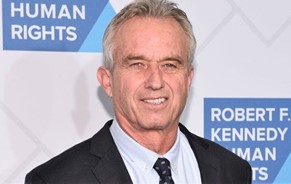
 Robert F. Kennedy

Robert Kennedy Jr est à la tête du mouvement mondial antivaccin qui fait les gros titres non parce qu’il est le fils de l’ancien président Robert F. Kennedy mais pour avoir dirigé le débrayage mondial contre les mandats de vaccination contre le covid.  Le mouvement a commencé le 3 novembre 2021 avec 200 villes participant a plusieurs rassemblements nationaux et internationaux. En tant que président du Children’s Health Defense Board et avocat principal, Kennedy proteste contre l’industrie pharmaceutique et son « piétinement des droits des citoyens ».

Robert F. Kennedy est un personnage courageux et un combattant pour la vérité sur les vaccins.  Il est considéré comme un anti-vax, a tort ou a raison mais il est avant tout contre la passe sanitaire et les vaccins Mrna expérimentaux à partir des informations obtenues dans ses diverses recherches.  M. Kennedy agit en qualité de défenseurs des droits humains et a l’instar de plusieurs médecins et virologues à travers le monde qui partage ses idées, il a pris le taureau par les cornes pour dénoncer ce que beaucoup de médecins et de scientifiques qualifient de génocide mondial.   Les médias l’ont dépeint non pas comme un défenseur des droits du citoyen mais comme un anti vax encombrant.  Son compte facebook et Instagram ont été bloqués à cause de ses narratives visant à combattre la tyrannie qui s’installe a grands pas dans le monde entier.  On l’a remarqué dans les mouvements de protestations en Europe en particulier à Milan ou il s’est solidarise avec le peuple Italien.

Kennedy a décrit le Dr Anthony Fauci, directeur des National Institutes of Health (NIH) comme « un échec abject » qui profite personnellement de la promotion des vaccins.  Il a affirmé clairement que les vaccins pfizer et Moderna sont dangereux. Les médias l’ont qualifié de conspirationnistes même quand des scientifiques et des médecins s’allient avec lui. 

 Gessica Geneus

Gessica Geneus est une actrice et jeune cinéaste en herbe qui vient d’introduire son nouveau film « Freda » au festival de Cannes et c’est le premier film Haitien qui a été présenté à Cannes depuis 1993 avec une mention spéciale.  « Freda »  a obtenu déjà un prix au festival de film panafricain et de télévision.  C’est le 2e film qui sera soumis à l’academy award pour le meilleur film international.  Le fameux metteur en scène et directeur Francis Ford Coppola s’est joint à ce projet après avoir visionné le film et qui l’apprécie pour avoir démontré un visage authentique de la situation haïtienne.  Le film se base sur l’expérience vécue de Gessica grandissant dans un quartier pauvre de Port au Prince. Freda a été filmé dans la capitale en 2018 durant les manifestations contre la dilapidation des fonds PetroCaribe par les dirigeants d’alors qui  n’ont pas investi dans des programmes sociaux selon l’accord original avec le gouvernement Vénézuélien.  Dans le film Freda discute avec ses camarades de l’utilité de ces manifestations et l’héritage du colonialisme. 

Gessica a étudié la cinématographie en France et Freda est l’une de ses réalisations.

 Ariel Henri

Après l’assassinat le plus odieux de l’histoire d’Haïti d’un président en exercice depuis Vilbrun Guillaume Sam, le Premier Ministre nommé par Jovenel Moïse apparaissait être le choix le plus légitime qu’il fallait puisqu’il a été nommé par le président avant sa mort.  Quel ne fut pas l’étonnement de tous lorsque la DIGICEL a confirmé la conversation entre le PM et l’un des présumés assassins du feu président, en l'occurence Joseph Badio.  Le Premier Ministre par la suite a changé tous les directeurs des postes clés susceptibles de faire avancer l’enquête sur la mort de Jovenel Moïse, y compris le ministère de la Justice et le Commissaire du gouvernement.  Ce n’est pas suffisamment suspect, les Haïtiens comme d’habitude contemplent cette pantalonnade avec leur regard passif.  Ce qui signifie que dans ce pays appelé Haïti, tout est possible pourvu que le CORE Group ne s’en plaigne.  Le premier Ministre en mission commandée demeure le chef de l’Etat, le Chef du gouvernement et en fin de compte le chef de rien du tout.  Malgré tous les soupçons qui pèsent sur lui, il n’y aura pas certainement de « pays Lock » comme on l’avait fait contre le président assassiné vu que ladite opposition ou opposition de VILAINS de 2021 (avec leurs moutons de Panurge) voit--singulièrement-- les choses autrement.  Qui vivra verra !

Eddy Cavé 

Il est aussi de coutume en cette fin d’année pour le réseau Haiti Connexion Network (HCN) de choisir en son sein une personnalité qui s’est distinguée à travers ses colonnes à cause d’efforts personnels, d’un talent littéraire ou bien d’une prolificité individuelle.  Cette année nous avons le plaisir de reconnaitre notre collaborateur de longue date Eddy Cavé au vu des critères précités. Malgré ses multiples occupations, Eddy trouve toujours le temps d’envoyer dans les colonnes de HCN, souvent en primeur, ses textes d’une rare élégance sur des sujets divers. Voici ce qu’ une admiratrice  a dit de notre Eddy : « Tu n’as pas changé, Eddy, contente de te voir, à quand le nouveau livre ?» En effet, Eddy est un collaborateur loyal,  qui n’a pas changé depuis le début envers ses amis et HCN. Il est écrivain et auteur de plusieurs publications.

Voilà donc notre monde pour l’année 2021 ! Dans un monde si controversé, il aurait fallu un article fleuve pour passer en revue l’année 2021 avec tous ses personnages controversés ou non qui ont fait impact sur nous, d’une manière ou d’une autre, d’une part.

Et d’autre part, il y a de ceux qui, dans les coulisses de l’anonymat, loin des feux de la rampe, pensent peut-être « qu’on peut être célèbre à travers son anonymat ». Ils ont parfois raison. Nous savons que parmi ceux-là, il y a des enfants qui ne peuvent pas exprimer leur célébrité parce qu’ils sont des enfants.  En ce sens nous voulons être leur porte-parole pour étaler aux yeux du monde leur talent ici même. C’est ainsi que nous avons choisi un groupe d’enfants qui ont fait valoir leur talent d’une manière spéciale pour exprimer au monde un souhait de Joyeux Noel. Cette exhibition ci-dessous a fait le tour de la toile haïtienne et nous était parvenue grâce à une courtoisie de Jean Rico Louis, un membre de notre ‘Think Tank’ ou Groupe de Réflexion de HC sur WhatsApp. Voyez donc en bas comment le talent peut s’exprimer chez les enfants sous n’importe quelle forme et dans n’importe quelle couche sociale malgré les vicissitudes de leur vie !


Sur ces notes de voix enfantines, toute l’équipe de Haiti Connexion Network et Radio Francophonie Connexion souhaitent une bonne et heureuse année 2022 à tous ! A la prochaine.

Les choix ci-dessus ont été recommandés par quelques membres de notre conseil éditorial (Editorial Board) à qui nous disons merci.


samedi 9 octobre 2021

New US envoy, new mission in Haiti ?

Google Translater for Website

Click on the dropdown button to translate.

Translate this page:

You can translate the content of this page by selecting a language in the select box.

Vous pouver traduire cet article dans la langue de votre choix dans la case de selection

Under Secretary of State for Civilian Security, Democracy and Human Rights Uzra Zeya will travel to Haiti and Panama from October 12–16, 2021.

In Haiti, Under Secretary Zeya will meet with Prime Minister Ariel Henry to discuss an inclusive, Haitian-led political dialogue that will lead to free and fair elections; how Haiti can provide better security for all its citizens; and support for returning Haitian migrants.  The Under Secretary will also meet with Minister of Justice Liszt Quitel to discuss the investigation into President Jovenel Moïse’s assassination and the Bel-Air, La Saline, and Grand Ravine massacres.  The Haitian people deserve justice in all these cases.  Under Secretary Zeya will also meet with the International Organization for Migration (IOM) and with UNICEF to thank them for their humanitarian assistance and earthquake recovery efforts in Haiti, including IOM’s assistance to the Haitian government in receiving Haitian returnees.  These meetings will advance partnerships that are addressing the root causes of migration in Haiti, and support Haitian-led efforts toward the restoration of democratic institutions.

Under Secretary Zeya will then travel to Panama City to meet with Panamanian President Laurentino Cortizo and participate in a High-Level Security Dialogue with the Government of Panama.  The October 14 High-Level Security Dialogue will advance ongoing collaboration between the United States and Panama to jointly address regional migration challenges, combat money laundering and drug trafficking, and fortify respect for democratic principles across the region.  The Under Secretary will also meet with international organizations, civil society, and NGOs to further collaboration with these important partners on issues relating to security, providing international protection, and migration management.  Finally, Under Secretary Zeya will travel to the Darién region to learn about Panamanian, U.S., and international organizations’ efforts to address the challenges of irregular migration and to provide humanitarian assistance to refugees, asylum seekers, and vulnerable migrants.

jeudi 23 septembre 2021

The United-States Special Special Envoy to Haiti Daniel Foute Resigns in Disgust (this title is from Haiti Connexion Network)

Google Translater for Website

Click on the dropdown button to translate.

Translate this page:

You can translate the content of this page by selecting a language in the select box.

Vous pouver traduire cet article dans la langue de votre choix dans la case de selection

US Envoy to Haiti Resigns, Citing Political Intervention and “Inhumane” Deportation Policy

By Jake Jhonston


 Jake Johnston is a Senior Research Associate at the Center for Economic and Policy Research in Washington, D.C.

READ FULL BIO


Exactly two months after his appointment, Dan Foote has submitted his resignation as United States Special Envoy to Haiti, citing a “deeply flawed” US policy toward the nation that includes continued political intervention and the administration’s recent decision to ramp up deportations. “I will not be associated with the United States inhumane, counterproductive decision to deport thousands of Haitian refugees,” Foote wrote in his resignation letter, which was sent to Secretary of State Antony Blinken on September 22.

 The resignation comes as the Biden administration pushes forward with one of the largest mass expulsions of asylum seekers in decades. At least 12 flights have transported an estimated 1,400 individuals from Texas to Haiti in the past four days, and such flights are expected to nearly double throughout the week. The Biden administration has pledged to totally close the Del Rio, Texas border camp, where some 14,000 people had gathered last week hoping to apply for asylum in the United States. Though the administration has stated it is prioritizing single adults for deportation, flight manifests show that a significant portion of those sent to Haiti are families with young children.

The head of Haiti’s migration office, Jean Negot Bonheur Delva, has personally called for a moratorium on the flights. Delva, however, said the government was not in a position to make a formal request. “We need to understand that this is a relationship between a big and a small country,” he told the Washington Post.

Daniel Foute

 The administration is facing increasing criticism from influential figures within the Democratic party, including Speaker of the House Nancy Pelosi and Senate leader Chuck Schumer. While the NAACP as well as many human rights organizations have denounced the anti-Black treatment of refugees witnessed at the southern border. Earlier in the week, border patrol agents on horseback charged at individuals and in some cases seemed to brandish their reins as whips.

“The events that took place yesterday are all too familiar to those that are aware of America’s ugly history,” NAACP President and CEO Derrick Johnson wrote, urging supporters to take action. 

“It is no secret that Haiti – the first Black republic – has been severely punished by western powers for centuries. This latest incident is nothing short of adding insult to injury.” -- NAACP President and CEO Derrick Johnson.

The Haitian Bridge Alliance and Human Rights First noted this was the latest in a long history of discriminatory behavior toward Haitians seeking safety in the US.

 Foote, the former special envoy, did not just have harsh words for the administration’s immigration policy, however. Writing that his recommendations had been ignored or misrepresented to superiors, he called the general US policy approach to Haiti “deeply flawed.”

 In his resignation letter, Foote connects the broader migration crisis to US policy in Haiti. While Haiti needs security and humanitarian assistance, “what our Haitian friends really want, and need, is the opportunity to chart their own course, without international puppeteering and favored candidates but with genuine support for that course,” Foote writes. “I do not believe that Haiti can enjoy stability until her citizens have the dignity of truly choosing their own leaders fairly and acceptably.”

 Foote had been appointed to help oversee a review of US policy in Haiti following pressure from members of Congress. “For decades, the international community has invested hundreds of millions of dollars to help Haiti achieve political stability and a representative democracy. In order to move forward more productively, we must acknowledge that these efforts have failed to achieve their desired results, and that continuing along the same path will only exacerbate the situation,” 68 members of Congress, led by Chairman of the House Foreign Affairs Committee, Gregory Meeks, wrote in April of this year. “We believe it is past time for a more significant review of U.S. policy in Haiti. We look forward to working with you to make this a reality,” the members wrote, urging the appointment of a special envoy.

 From undermining Haitian farmers with cheap food imports to overturning election results and helping to overthrow governments, the US bears significant responsibility for the conditions in Haiti that so many are seeking to flee. As Brian Concannon, the director of Project Blueprint, wrote in the Miami Herald, 

“The United States has been destabilizing Haiti — and generating refugees — since the country emerged from a slave revolt in 1804 into a world run by slaveholding countries that felt threatened by the example of successful, self-emancipated Black people." -- Brian Concannon

 But it appears Foote did not find support within the administration for such a break from past policy. While Foote does not specify who did not agree with his recommendations, it has been clear since his appointment that he and US Ambassador to Haiti Michele Sison have rarely been on the same page. Multiple sources in Haiti have reported receiving mixed messages from the two US diplomats and have been unclear about who was really in charge of US policy.

 Secretary of State Blinken appointed Foote to the position two weeks after the assassination of President Jovenel Moïse. In the wake of Moïse’s death, the US  and other nations that make up the “Core Group” of foreign representatives in Haiti, along with the UN, threw their weight behind Dr. Ariel Henry as prime minister. Henry had been appointed by Moïse but had yet to take office or form a cabinet at the time of the assassination. Foote’s first trip to Haiti came just days after Henry’s assumption of the position.

 Last week the Core Group issued yet another statement in support of Henry and his efforts to reach a political agreement. In his resignation letter, Foote makes clear his opposition to this decision. The Core Group has “continued to tout [Henry’s] ‘political agreement’ over another broader, earlier accord shepherded by civil society,” he writes. “The hubris that makes us believe we should pick the winner — again – is impressive.”

The US, while voicing support for a broad-based dialogue that includes civil society, has largely refused to engage with the Civil Society Commission for a Haitian Solution to the Crisis, which has been meeting with a broad array of organizations for many months, even before the president’s assassination, in an effort to seek a Haitian-led path forward. Henry’s internationally-backed efforts to reach his own accord was seen as a direct effort to undermine the commission’s work.

 “This cycle of international political interventions in Haiti has consistently produced catastrophic results,” Foote concludes, again linking US policy to the root causes of migration. “More negative impacts to Haiti will have calamitous consequences not only in Haiti, but in the US and our neighbors in the hemisphere.” 

Google Translater for Website

Click on the dropdown button to translate.

Translate this page:

 Exactly two months after his appointment, Dan Foote has submitted his resignation as United States Special Envoy to Haiti, citing a “deeply flawed” US policy toward the nation that includes continued political intervention and the administration’s recent decision to ramp up deportations. “I will not be associated with the United States inhumane, counterproductive decision to deport thousands of Haitian refugees,” Foote wrote in his resignation letter, which was sent to Secretary of State Antony Blinken on September 22. 

The resignation comes as the Biden administration pushes forward with one of the largest mass expulsions of asylum seekers in decades. At least 12 flights have transported an estimated 1,400 individuals from Texas to Haiti in the past four days, and such flights are expected to nearly double throughout the week. The Biden administration has pledged to totally close the Del Rio, Texas border camp, where some 14,000 people had gathered last week hoping to apply for asylum in the United States. Though the administration has stated it is prioritizing single adults for deportation, flight manifests show that a significant portion of those sent to Haiti are families with young children. 

The head of Haiti’s migration office, Jean Negot Bonheur Delva, has personally called for a moratorium on the flights. Delva, however, said the government was not in a position to make a formal request. “We need to understand that this is a relationship between a big and a small country,” he told the Washington Post

The administration is facing increasing criticism from influential figures within the Democratic party, including Speaker of the House Nancy Pelosi and Senate leader Chuck Schumer. While the NAACP as well as many human rights organizations have denounced the anti-Black treatment of refugees witnessed at the southern border. Earlier in the week, border patrol agents on horseback charged at individuals and in some cases seemed to brandish their reins as whips

“The events that took place yesterday are all too familiar to those that are aware of America’s ugly history,” NAACP President and CEO Derrick Johnson wrote, urging supporters to take action. “It is no secret that Haiti – the first Black republic – has been severely punished by western powers for centuries. This latest incident is nothing short of adding insult to injury.” The Haitian Bridge Alliance and Human Rights First noted this was the latest in a long history of discriminatory behavior toward Haitians seeking safety in the US. 

Foote, the former special envoy, did not just have harsh words for the administration’s immigration policy, however. Writing that his recommendations had been ignored or misrepresented to superiors, he called the general US policy approach to Haiti “deeply flawed.” 

In his resignation letter, Foote connects the broader migration crisis to US policy in Haiti. While Haiti needs security and humanitarian assistance, “what our Haitian friends really want, and need, is the opportunity to chart their own course, without international puppeteering and favored candidates but with genuine support for that course,” Foote writes. “I do not believe that Haiti can enjoy stability until her citizens have the dignity of truly choosing their own leaders fairly and acceptably.” 

Foote had been appointed to help oversee a review of US policy in Haiti following pressure from members of Congress. “For decades, the international community has invested hundreds of millions of dollars to help Haiti achieve political stability and a representative democracy. In order to move forward more productively, we must acknowledge that these efforts have failed to achieve their desired results, and that continuing along the same path will only exacerbate the situation,” 68 members of Congress, led by Chairman of the House Foreign Affairs Committee, Gregory Meeks, wrote in April of this year. “We believe it is past time for a more significant review of U.S. policy in Haiti. We look forward to working with you to make this a reality,” the members wrote, urging the appointment of a special envoy. 

From undermining Haitian farmers with cheap food imports to overturning election results and helping to overthrow governments, the US bears significant responsibility for the conditions in Haiti that so many are seeking to flee. As Brian Concannon, the director of Project Blueprint, wrote in the Miami Herald, “The United States has been destabilizing Haiti — and generating refugees — since the country emerged from a slave revolt in 1804 into a world run by slaveholding countries that felt threatened by the example of successful, self-emancipated Black people.

But it appears Foote did not find support within the administration for such a break from past policy. While Foote does not specify who did not agree with his recommendations, it has been clear since his appointment that he and US Ambassador to Haiti Michele Sison have rarely been on the same page. Multiple sources in Haiti have reported receiving mixed messages from the two US diplomats and have been unclear about who was really in charge of US policy. 

Secretary of State Blinken appointed Foote to the position two weeks after the assassination of President Jovenel Moïse. In the wake of Moïse’s death, the US  and other nations that make up the “Core Group” of foreign representatives in Haiti, along with the UN, threw their weight behind Dr. Ariel Henry as prime minister. Henry had been appointed by Moïse but had yet to take office or form a cabinet at the time of the assassination. Foote’s first trip to Haiti came just days after Henry’s assumption of the position.

Last week the Core Group issued yet another statement in support of Henry and his efforts to reach a political agreement. In his resignation letter, Foote makes clear his opposition to this decision. The Core Group has “continued to tout [Henry’s] ‘political agreement’ over another broader, earlier accord shepherded by civil society,” he writes. “The hubris that makes us believe we should pick the winner — again – is impressive.”

The US, while voicing support for a broad-based dialogue that includes civil society, has largely refused to engage with the Civil Society Commission for a Haitian Solution to the Crisis, which has been meeting with a broad array of organizations for many months, even before the president’s assassination, in an effort to seek a Haitian-led path forward. Henry’s internationally-backed efforts to reach his own accord was seen as a direct effort to undermine the commission’s work. 

“This cycle of international political interventions in Haiti has consistently produced catastrophic results,” Foote concludes, again linking US policy to the root causes of migration. “More negative impacts to Haiti will have calamitous consequences not only in Haiti, but in the US and our neighbors in the hemisphere.” 

dimanche 12 septembre 2021

Crise des gangs au Nigéria : des lettres au lieu de téléphones portables et d'Internet

Google Translater for Website

Click on the dropdown button to translate.

Translate this page:

You can translate the content of this page by selecting a language in the select box.

Vous pouver traduire cet article dans la langue de votre choix dans la case de selection


NDLR:Les compagnies d'Internet et de téléphones portables (DIGICEL, NATCOM ou autres) pourraient-elles aider Haiti à résoudre la crise des gangs et des kidnappings entravant le développement d'Haïti ? Peut-être!

Au Nigéria où il existe aussi une crise du même genre, l'Intenet et les portables sont pratiquement coupés dans les fiefs des gangs rendant quotidiennment  la vie dure aux nigériens paisibles comme Haiti. Le raisonnement: enlever aux membres de ces bandes armées des moyens tactiques voire stratégiques de communications au cours desquelles elles planifient leurs forfaits, les lettres remplaçant les portables en ce qui concerne les zones affectées du Nigéria. Des vivres et autres produits alimentaires leurs sont aussi coupés, selon l'article d'en bas.

Comme c'est aussi évoqué dans l 'article ci-dessous, il y a des  pros et des cons  (bons et mauvais résultats) dans la mise en place de ces mesures (policières) qui peuvent sembler drastiques aux yeux de certains. Aux grands maux, les grands remèdes dit l'adage. A la société haitienne de savoir si elle veut  en finir avec la crise des gangs qui causent des sanglots en son sein.

Vous pouvez traduire l'article en français en choisissant la langue dans la case ci-contre.


Nigeria Gangs Crisis: letters instead of mobile phones and Internet 

In our series of letters from African journalists, Mannir Dan Ali, former editor-in-chief of Nigeria's Daily Trust newspaper, considers the impact of the latest tactic to tackle Nigeria's ruthless kidnapping gangs - cutting off access to mobile phones and the internet.
For the last few years life in rural areas of north-western Zamfara state has been agonisingly brutish.

Gun-toting motorbike gangs have made the state of approximately 15,352 sq miles (39,761 sq km) - an area bigger than countries like Burundi, Lesotho and Rwanda - a haven for wanton killing, rape and kidnapping for ransom.
The gang members are devious and well organised, often wearing military fatigues to confuse villagers as they come under attack.

This problem, which has festered for years, has now spread to at least five neighbouring states.
Various initiatives have been tried in Zamfara to end their reign of terror, including:
■   An amnesty for repentant gang members
■   A no-fly zone - imposed amid allegations that helicopters were delivering arms to the bandits
■   And a ban on mining after it was suspected gold was being used to fund the kidnappers.
But these measure have not made much difference, so the Zamfara authorities have now banned the movement and sale of animals, along with the weekly markets where farmers and business people go to trade. Stealing animals is one of the gangs' main streams of income.

The more drastic measure has been switching off all of Zamfara's 240 mobile phone towers.
The aim is to deny the criminals the means of communication with their informants and of negotiating ransoms with the families of those abducted.
A sustained air and ground operation has also been launched.

The phone blackout - which also affects communities on Zamfara's borders with other states - comes at a huge cost to families and businesses.
Simple things that could be done with just a call now need a whole day's trip to achieve.
Some are resorting to writing letters. Without a functioning postal system, these are being delivered via commercial buses that still travel between towns in the state and to other parts of the country.

A Zamfara-born resident of the capital, Abuja, told me that it has been unbearable not knowing if his family was safe.
It was only when a relation arrived in Abuja a few days ago that he received an update on their wellbeing.

Another told me that he was so worried, he will be travelling back to Zamfara soon to check up on his family.

Gangs 'driven elsewhere'

In spite of the difficulties caused by the phone shutdown, discussions on radio talk shows in Abuja are supportive of the measure.
One native of the state based in the capital said it was far better to endure a short period of pain rather than the daily mayhem that has turned Zamfara into one big jungle where armed men rule.

For now there is a near information blackout from Zamfara on how operations against the criminals are going.

Even journalists have no means of ascertaining the true state of affairs.
One reporter told me that she has been trying to convince the authorities to allow her to embed with troops.

More on Nigeria's kidnap crisis:
■   WATCH: Kidnappers demand millions for a child's life
■   ANALYSIS: Outrage at Nigeria's brazen bandit attacks
■   EXPLAINER: The motorcycle bandits terrorising Nigeria

Anecdotal reports suggest some degree of success in dislodging the gangs from their hideouts in forested areas.
However, more worryingly, this has been said to have driven them to neighbouring areas like Katsina, where I was born.

There has been a spike in abductions there in the last week, including that of the children of a local notable and that of a retired federal civil servant alongside his 15-year-old daughter.
I personally chose to move my mother away from her home recently - and just a few days ago, three university students were abducted less than a kilometre from her house.
Many security analysts argue that the current push, with all its pains, should have been a simultaneous operation in all the six states affected, so that the criminals would have no room for escape.
Most agree that only a joined-up approach will end the nightmare.

Source: BBC

Follow us on Twitter @BBCAfrica, on Facebook at BBC Africa or on Instagram at bbcafrica

More Letters from Africa:
■   Viewpoint: Why Twitter got it wrong in Nigeria
■   'If I don't pay they'll come for my kidney'
■   Drugs, dates and disputes at mules' border crossing
■   The true cost of Kenya's political love triangle
■   How Zimbabwe is still haunted by Robert Mugabe
Follow us on Twitter @BBCAfrica, on Facebook at BBC Africa or on Instagram at bbcafrica

vendredi 10 septembre 2021

Nouvelle Constitution pour Haïti?

Google Translater for Website

Click on the dropdown button to translate.

Translate this page:

You can translate the content of this page by selecting a language in the select box.

Vous pouver traduire cet article dans la langue de votre choix dans la case de selection

PORT-AU- PRINCE, HAITITI - Le gouvernement haïtien a publié ce mercredi 8 septembre 2021 un projet de nouvelle constitution et a de nouveau promu l'idée qu'une telle réforme est nécessaire alors que le pays reste embourbé dans la crise depuis l'assassinat du président Jovenel Moise.

 "Une nouvelle constitution ne serait pas une panacée pour résoudre tous nos problèmes", a déclaré le Premier ministre Ariel Henry.  "Mais si nous parvenons à nous mettre d'accord sur cette manière d'organiser la gouvernance de manière plus équilibrée et efficace, ce sera un point de départ pour d'autres accords sur l'avenir de notre pays."

PM Ariel Henry
 Les politiciens haïtiens et les citoyens ordinaires sont profondément divisés sur la façon dont leur nation pauvre et sujette aux catastrophes devrait être gérée en ce moment, alors qu'elle tente de se remettre du meurtre de Moise dans sa résidence le 7 juillet.

 Le gouvernement formé après l'assassinat, dirigé par Henry, souhaite la tenue d'élections générales dès que possible, tandis que l'opposition affirme qu'il devrait y avoir un gouvernement de transition pendant deux ans.

 Outre les élections législatives - qui auraient dû avoir lieu en 2018 mais ont été retardées - et les élections présidentielles, le gouvernement veut faire passer une réforme constitutionnelle que Moise avait déjà commencée.

 La nouvelle charte renforcerait les pouvoirs du président, au détriment du parlement.

 Il supprimerait le poste de Premier ministre et créerait une vice-présidence, qui serait pourvue en même temps que le président en un seul tour de scrutin.

 Un tel arrangement est conçu pour aider Haïti à éviter l'impasse à laquelle il est douloureusement habitué pour faire avancer les choses : maintenant, chaque fois qu'il y a un nouveau gouvernement, le parlement doit approuver l'agenda politique du Premier ministre, et cela est toujours lié à un débat sans fin  parmi les législateurs.

 Les défenseurs de la nouvelle constitution affirment qu'elle aiderait à lutter contre le problème chronique de la corruption en facilitant la tenue de procès devant les tribunaux ordinaires des représentants du gouvernement, des ministres et du président une fois qu'il ou elle quitte ses fonctions.

 Dans l'état actuel des choses, la procédure rarement utilisée pour juger de tels fonctionnaires est que la chambre basse du parlement porte des accusations et que le Sénat tienne un procès.

 « L'immunité n'est pas synonyme d'impunité », a déclaré Mona Jean, une avocate qui siège au comité qui a rédigé la nouvelle constitution.  "Un emploi gouvernemental ne doit pas être une source d'enrichissement illicite."

 Henry n'a pas précisé comment il pense que la nouvelle constitution devrait être votée.

 Moise avait proposé un référendum, prévu par l'administration électorale pour le 7 novembre, mais l'idée s'est avérée controversée, les critiques affirmant qu'elle viole la constitution actuelle.

 Il a été rédigé en 1987 après la chute de la dictature des Duvalier et interdit « toute consultation populaire visant à modifier la constitution par voie de référendum ».

Le premier ministre Ariel Henry est lui-même embrouillé dans l’enquête sur l’assassinat du président Moïse. Son nom est cité dans un rapport du RNDDH comme étant l’une des personnes qui avaient été en contact au téléphone même au cours de l’assassinat avec Joseph Félix Badio - un ancien employé gouvernemental en fuite - que la Police haïtienne accuse d’être un acteur principal dans l’assassinat de Moïse. Les analystes se demandent donc  si Henry (un neurochirurgien de profession) ne devrait pas démissionner de son poste pour se soumettre à l’intérogatoire du commissaire du gouvernement en charge de l’instruction de l ‘enquête sur l’assassinat.

 De son côté, Henry joue les rôles du sapeur-pompier, pacificateur et bon gars qui appelle à l’unité et la bonne gouvernance du pays. Il veut aussi “justice” pour le président assassiné. Henry a été nommé premier ministre par Moïse avant son assassinat mais il n’a jamais été assermenté. On ne sait pas encore comment il va s’y prendre pour organiser le vote sur la nouvelle constitution.
 A suivre.

Sources combinées

mardi 10 août 2021

Opinion | Haiti’s Forgotten Asset: Its Diaspora

Google Translater for Website

Click on the dropdown button to translate.

Translate this page:

You can translate the content of this page by selecting a language in the select box.

Vous pouver traduire cet article dans la langue de votre choix dans la case de selection

From NFL players to college presidents to think-tank heads, influential Haitians living abroad could be a powerful voice for reform.


Tennis star Naomi Osaka holds the Olympic torch during the opening ceremony of the 2020 Summer Olympics in Tokyo, July 23, 2021. Osaka was born to a Haitian father and a Japanese mother. | AP Photo/Natacha Pisarenko


Joel Dreyfuss is a founder of the National Association of Black Journalists and a former Global Opinions columnist for the Washington Post. He is writing a book about his family's 300-year involvement with Haiti.

Source: Politico

 When Naomi Osaka lit the Olympic torch at opening ceremonies for Tokyo 2020, thousands of Haitians swelled with pride. And when she lost unexpectedly in the tennis competition, many in the country shared her pain. For Haitians, Osaka, whose father is Haitian-American, is yet another high-profile member of a vibrant Haitian diaspora that could play an important role in addressing Haiti’s chronic political problems.

 The yet-unsolved assassination of President Jovenel Moise has put Haiti’s volatile politics and grinding poverty into the spotlight. A month after Moise’s death, a new prime minister has introduced a new cabinet and the U.S. has dispatched security experts to help the Haitian government secure vital infrastructure, though the White House insists there is still no plan to send troops.

  The debate about what to do in the aftermath has yet to invoke an important resource: the more than 2 million Haitians living abroad. That’s not surprising. The Haitians in the diaspora evoke mixed feelings in Haiti: pride in successes like Osaka’s and disdain because they left the country. For a number of years, “Diaspo” has been a derogatory term, evoking the image of an arrogant Americanized Haitian who came home to flaunt his or her success.

  But as Haiti has sunk into despair, the diaspora could be a lifeline. Haitians living abroad are not tainted by the corruption that pervades the political class in Haiti, and have achieved success in more meritocratic societies. The diaspora has acquired expertise, cultural and political clout, and experience living in democratic countries. As America struggles to respond to Haiti’s crisis, policymakers in Washington and diaspora members themselves should think about how to tap this resource. In particular, the diaspora can use their influence in Washington—as well as Ottawa and Paris—to bring international attention to the work of a commission of progressive reformers in Haiti. By shining a light on Haitian solutions to Haitian problems, the community can help break Haiti’s vicious cycle of disorder, hope and disappointment.

 Haitians have been migrating in large numbers to the U.S. and Canada since Francois Duvalier seized power in the late 1950s. A second, larger wave fled when his son Jean-Claude “Baby Doc” Duvalier succeeded his father in 1971. Haitian communities abroad, now in their second and third generations, have produced notable examples of upward mobility and achievement. Haitian-Americans are corporate executives, college presidents and deans, writers and playwrights, elected officials, actors and professional athletes, doctors and nurses, technicians and caregivers. Prominent Haitian-Americans include former Nintendo of North America President and CEO Reginald Fils-Aimé, Xavier University of Louisiana President Reynold Verette, novelist and MacArthur “genius” Edwidge Danticat, reality-show producer Mona Scott-Young (“Love and Hip Hop”), musician Wyclef Jean, University of Miami medical school dean Henri Ford, former Republican congresswoman Mia Love, essayist Roxanne Gay and NFL linebacker Jason Pierre-Paul.

It’s not just in the U.S. Michaëlle Jean served as Canada’s governor general from 2005 to 2010 while Dominique Anglade, a former cabinet minister, became head of Canada’s Quebec Liberal Party last year.

Haiti has a highly successful cultural sector that depends on talent both in Haiti and abroad. Haitian literature is highly regarded in the French-speaking world. Haitian authors, including Yanick Lahens and Louis-Philippe Dalembert, have garnered top literary prizes in France and Canada. Dany Laferrière is a member of that élite arbiter of the French language, the Académie Francaise. Haitian art has won critical acclaim and Haitian music has flourished in the Caribbean, Europe and Africa.

 While the Haitian community has made a name for itself abroad, young people in Haiti itself—galvanized by social media—are making their voices heard in the country’s politics. The civil society movement behind more than two years of massive anti-regime protests in Haiti, formally called the Commission To Search for a Haitian Solution to the Crisis, reflects this new involvement. The commission sees the installation of Prime Minister Ariel Henry as a ritual shuffle of the same rotten cards and a setup for a sham election. Instead, it wants an interim government with a limited portfolio to reform the judicial system and the police before credible elections can be scheduled.

 But the structural reforms that Haitian progressives envision will be a tough sell to the international community. Policy experts talk about “Haiti fatigue” after the failed multibillion-dollar intervention following the 2010 earthquake. The Biden administration has signaled a lack of interest in nation-building projects. Haiti will have to make a compelling case that this time it’s different.

 This is where Haitians abroad come in, if they can organize into a coherent force. The diaspora has helped move the needle on political issues related to Haiti in the past. On April 20, 1990, 100,000 Haitian-Americans marched across the Brooklyn Bridge to protest an FDA ban on blood donations by sub-Saharan Africans and Haitians because of fears about HIV. The size of the protest shocked the New York political establishment and launched a wave of political activism among Haitians in New York. Eventually, the FDA ban was withdrawn. More recently, Haitian-Americans have teamed up with the Congressional Black Caucus and other supporters of Haiti to press the U.S. government on immigration issues, such as temporary protected status.

Today, the diaspora can serve as a voice for reform in the corridors of power in Washington, Ottawa and Paris, and counter the lobbyists hired by influential Haitians who want to maintain the status quo. The House Haiti Caucus, formed a few months before Moise’s assassination, has urged the Biden administration to pay attention to the grassroots movement. In Canada, more than 20 human rights, labor and Haitian diaspora organizations recently sent a letter to Prime Minister Justin Trudeau urging him to support the views of the commission on prioritizing reform before elections.

 Patrick Gaspard, the new head of the influential left-leaning think tank, the Center for American Progress, is Haitian-American. To capitalize on existing momentum and help mobilize the diaspora, he could organize a think tank dedicated to Haiti or a conference where Haitians living in Haiti can make the case to policymakers for a new approach. One important topic could be building more transparent and tamper-proof systems for management of government finances to help regain the Haitian public’s trust. The group could also expand on an initiative launched by lawyers based in France to teach mediation to members of the Haitian judiciary—a much-needed skill in a winner-take-all political culture.

 Financially, Haitians overseas already play a crucial role keeping their home country afloat. According to the World Bank, Haitians living abroad sent $3.3 billion a year in remittances (cash transfers) in 2019, nearly 25 percent of the country’s GDP. The money from Haitian communities in the U.S., Canada, France, Brazil and elsewhere feeds, clothes, shelters and educates relatives left behind. The diaspora can build on this role by targeting investments to sectors that need foreign capital such as renewable energy and food production, areas the oligarchs are not likely to embrace.

 The Haitian government has the potential to play spoiler to the diaspora’s efforts. For years, politicians in Haiti have paid lip service to engaging the diaspora’s expertise and capital, but have done little to make it happen. For a long time, Haiti did not recognize dual citizenship, barring Haitians who have taken citizenship abroad from running for high office or voting in elections. By contrast, immigrants from the Dominican Republic, which shares the island of Hispaniola with Haiti, can vote in Dominican elections, playing a role in setting their native country’s political agenda.

 Haitians abroad hesitate to invest their talent and money for the same reasons the country has trouble attracting other investors: corruption. The late President Moise and his predecessor Michel Martelly repeatedly declared that “Haiti is open for business” and urged Haitians abroad to pool their resources to help develop their country of origin. But neither president was able to move the needle on Haiti’s poor reputation as a place to invest. In 2019, Transparency International ranked Haiti 170th of the 180 countries it rates for public-sector corruption.

 Meanwhile, the United States—whose interventions have done more harm than good, even when well-intentioned—is similarly failing to capitalize on this influential group. American policy toward Haiti has consistently favored stability over reform, though that “stability” is increasingly elusive. Moise’s moves to undermine democracy and consolidate power before his death drew mild rebuke from Washington. When U.S. officials visited Haiti several days after the assassination, they failed to meet with the commission, one member told me. Many diaspora organizations in New York, Miami and Boston are similarly frustrated that they don’t get adequate face time with policymakers. Listening to ideas from the Haitian community—both in Haiti and abroad—on how to rebuild their country would be a novelty after years of intervention by “friendly” governments and NGOs.

 “The Commission has always considered the diaspora as a key stakeholder,” Monique Clesca, a member of the Commission and a former United Nations employee, told me, adding that the group has consulted key members of the Haitian community abroad about its plans.

 To be clear, Haitian-Americans should approach the task with humility, making sure above all to listen to the people with the most direct stake in Haiti’s future—the people of Haiti. Diaspora Haitians can play a role in spurring necessary reforms without ending up as yet another outside group professing to know what’s best for Haiti. They have had the valuable experience of living in a democracy. They bring expertise in dozens of disciplines and management skills that are sorely needed in a Haiti weakened by decades of brain drain. And they have a track record of success that can be applied to a country that badly needs a new narrative.

Featured Post

L’argent de la diaspora ne remplace pas l’initiative

Par  É ric Duvivier Masson "Aide-toi et le Ciel t'aidera" Fran ҫ ais La diaspora haïtienne ne peut pas servir de vache à lait ...