mardi 27 juillet 2021

Exclusive: Leaked documents obtained by CNN reveal death threats and roadblocks in Haiti assassination investigation

Google Translater for Website

Click on the dropdown button to translate.

Translate this page:

You can translate the content of this page by selecting a language in the select box.

Vous pouver traduire cet article dans la langue de votre choix dans la case de selection


By Caitlin HuMatt Rivers, Etant Dupain and Natalie Gallón, CNN
Photos and video by David von Blohn.

Updated 11:47 PM ET, Mon July 26, 2021

Port-au-Prince, Haiti (CNN)There was no mistaking the meaning in last week's anonymous text message: Do what we say or die.

"Hey clerk, get ready for a bullet in your head, they gave you an order and you keep on doing shit," read the July 16 text, one of several death threats sent to court clerks assisting Haiti's investigation into the murder of former President Jovenel Moise, according to official complaints filed with Haitian police and seen by CNN.

They're part of a cache of Internal Justice Ministry documents obtained exclusively by CNN, which reveal previously unheard testimonies from key suspects, mysterious attempts to influence the probe, and the acute danger felt by judicial investigators as they attempt to uncover who killed the president on July 7.
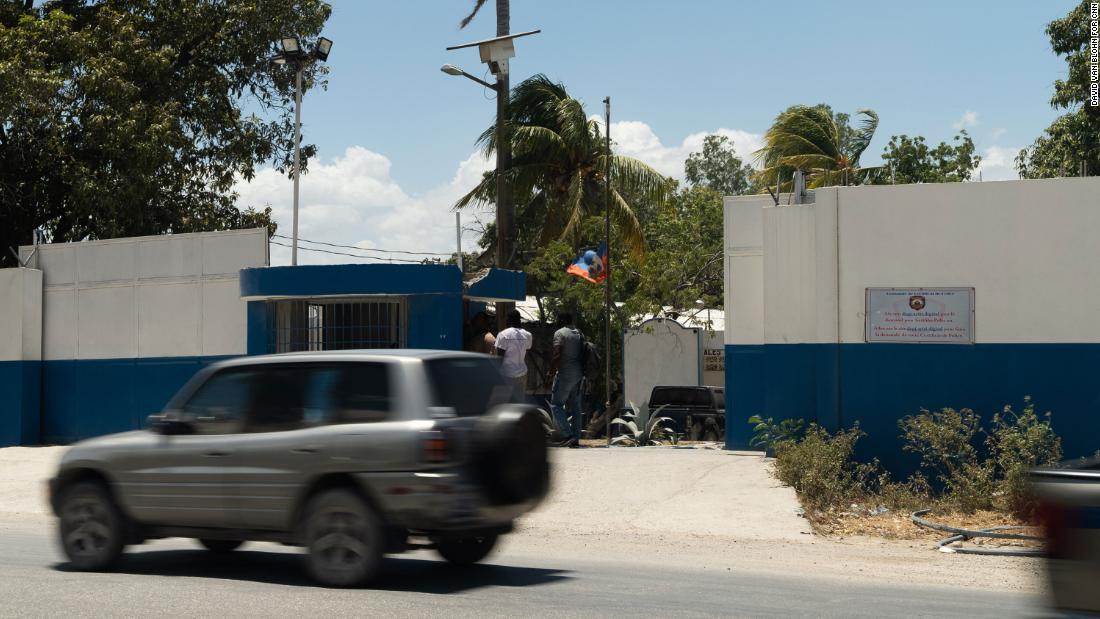

Le quartier général de la police judiciaire où se trouvent  des preuves et des témoins importants sont gardés 


Death threats are not the only thing making Haitian investigators' jobs ore difficult. Multiple sources have also described to CNN a series of unusual roadblocks thrown at investigators, including difficulty in accessing crime scenes, witnesses and evidence.

The result is an investigation that has repeatedly veered from established protocol, according to both insiders and independent legal experts. The question is why?

Death threats and strange requests

Multiple Haitian officials have received death threats since their investigation began two weeks ago, documents show.

Click button to enter email to sign up for CNN's Meanwhile in America newsletter.


Bottom of Form

Carl Henry Destin, the justice of the peace who officially documented Moise's ravaged home and body hours after his shooting, went into hiding just two days later. "As I am talking to you now, I am not home. I have to go into hiding somewhere faraway to talk with you," Destin told CNN, describing in rapid-fire French the multiple threatening phone calls he had received from unknown callers.

Clerks that work with Destin and other investigative justices have also been targeted, according to documents obtained by CNN. On July 12, the National Association of Haitian Clerks published an open letter calling for "national and international" attention to death threats received by two local clerks, Marcelin Valentin and Waky Philostene. The letter demands action from Justice Minister Rockefeller Vincent to guarantee their safety.

Valentin and Philostene did not respond to requests for comment about the letter.

"Waky, they told you to stop going around searching people's houses in the president assassination case and you refused. You've been told to take out two names and you refused, we're watching you."

-- One of the threats addressed to Philostene, from official documents.

More than a week later, documents from the Justice Ministry offer little evidence that such concerns were taken seriously, showing that clerks went on to personally lodge formal complaints on July 17 and 20 about receiving death threats -- from the same phone number.

Particularly unsettling is the timing of threats, which may suggest insider knowledge of investigators' movements.

Documents show that Valentin received an intimidating phone call on July 9, while he was on a job documenting two corpses of suspects in the assassination. According to the official complaint log, the caller demanded information about the investigation and threatened Valentin with death if he refused to add certain names to his report or to modify witness statements. The complaint doesn't detail the names or statements.

The next week, according to the same complaint, Valentin received a text message:

"I see you keep going on searches in the president's case, they told you to take out two names and you refuse. I am calling you and you refuse but I know your every move."

Reached for comment on Monday, the prosecutor in charge of the case, Bedford Claude, told CNN, "Everybody receives threats" -- including himself. He added that he would work on arranging more security for investigators.

Neither the Justice Minister nor the Haitian National Police responded to CNN's requests for comment.

Barred from the crime scene
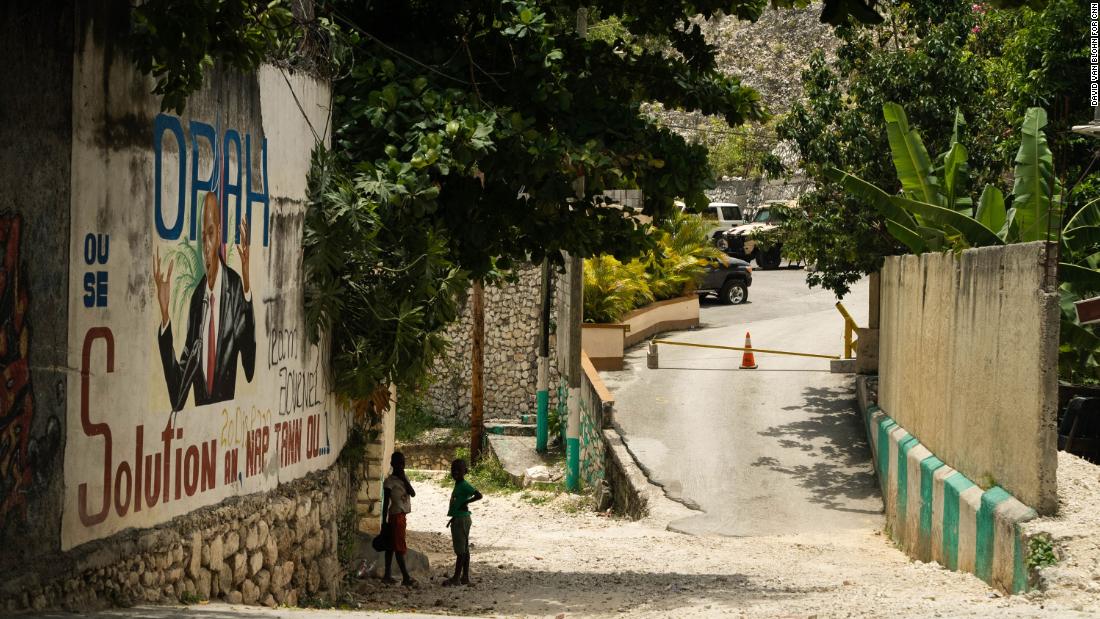

Fresque de Moise devant sa résidence à Port-au-Prince


Official revelations about Haiti's investigation into Moise's brutal assassination still don't quite add up.

There are obvious holes in the information provided to the public, including the still-unknown contents of CCTV footage from the president's residence on the night of the killing, and the testimonies of over 20 detained foreign suspects and two dozen local police officers.

It now appears that even Haitian investigators charged with bringing the truth to light are being left in the dark.

At crime scenes in Haiti, police typically secure the area and maintain order, while justices of the peace perform the initial investigation, document the scene and take witness testimony to create the official record of evidence. But sources close to the probe have described confusing lapses in protocol that resulted in the omission of key pieces of information from such judicial investigators' reports.

Sources told CNN that judicial investigators were given the run-around on multiple occasions when they attempted to watch the CCTV footage, which is held by police.

Fear stalks Haitians as their murdered president is buried and gangs terrorize the capital

Destin also said he and others were not immediately allowed to enter the site where Moise was attacked at around 1am. Despite his vital role in documenting the scene, the justice was barred from entering the police perimeter for hours -- a highly unusual delay that insiders say raises the specter of evidence tampering.

"Police informed me that the scene was not yet cleared to allow (me) to come to the scene to collect evidence," he told CNN. "I had to wait until 10:00am At that time, they then informed me that the police were on the scene and that we could now access the presidential residence."

According to Destin, police explained that the attackers were still nearby and posed a possible danger.

But sources say the judge and his team were made to wait just outside the president's residence -- where they would have been just as exposed to chance encounters with assassins on the run.

"I've never heard of anybody impeding a judge and their clerks from going into a crime scene," said Brian Concannon, an expert in the Haitian legal system.

"I guess it's conceivably possible that if police felt a bomb was going to go off, I guess they would have the right to cordon off everything. But in terms of how that's supposed to work ... Both judge and police are trusted with doing the same thing, responding to the crime scene," he said.

Meanwhile, sources tell CNN that FBI agents who visited the presidential residence a few days after the assassination were surprised to find an abundance of evidence left there by Haitian police, and wondered why it hadn't already been collected.

Special agents collected the additional evidence, and sources say Haitian authorities have allowed them continual access to it.

Missing witnesses

The headquarters of Haiti's judicial police, where key suspects and evidence are being held.

Things only got stranger inside the presidential residence, where multiple sources close to the investigation confirm that presidential guards -- potentially key witnesses in the killing -- were removed or allowed to leave the premises before they could be interviewed.

"When I got to the president's house, there was no police officer in the security booth as was always the case. Once I identified myself as the judge, then came some agents without proper identification and proper insignia. They looked like they were police officers, but I cannot tell you exactly who they were," Destin said.

The few witnesses who were available had not seen the initial confrontation with the president's assassins. According to a report seen by CNN, Destin was able to interview Jean Laguel Civil, chief coordinator of presidential security.

"President Jovenel Moise called me around 1am to tell me he heard a lot of gun shots outside of his residence and requested help. I immediately called Dimitri Herard, chief of (palace security) USGPN and (security official Paul Eddy) Amazan, who mobilized their troops quickly.

"They told me the road was blocked and they couldn't make it to the president's house. Dimitri told me all the guards couldn't make it there. I was on my way down from my house ... but a group of mercenaries who were coming from the president's house stopped me. Luckily they didn't do me any harm," reads part of Civil's statement in the report.

Civil was arrested on Monday, Bedford Claude, the prosecutor in the case, told CNN on Tuesday.

The report also shows that the president's daughter, Jomarly Moise, gave a statement to the justice despite the terrifying experience she had just lived through and the dramatic loss of her father.

"I heard a lot of gun shots around 1 am. I was in my room when this was all happening. My little brother and (I) hid in his bathroom. When the shooting stopped, I saw my mom was injured and sitting on the stairs. She had blood all over her arms."

Excerpt of Jomarly Moise's statement to investigators.

Absent however were the many security guards sworn to protect the president, who had been at the house during the attack.

"I was informed that none of those who were there on the night of the killing was present," Destin told CNN. "I did not have a chance to talk with anybody who was on the scene during the attack."

Twenty-four police officers are currently under administrative investigation, according to Haiti Police Chief Leon Charles, and several security chiefs have been detained. But more than two weeks after the killing, the clerks and judges responsible for processing testimony still have not heard from them.

Claude says he is satisfied with the work of the police and that they worked closely together. However, even he has not heard the testimony of any police stationed at the presidential residence during the night of the attack, he told CNN.

"The Central Direction of the Judicial Police have (heard their testimony). For myself, I have asked the DCPJ to bring them here so that I can hear it," Claude said.

The prosecutor declined to answer whether he had seen the CCTV footage from inside the residence.

Bodies moved

Sources close to the investigation also tell CNN that they have doubts about whether correct protocol has been followed in the processing of evidence and handling of crime scenes.

Justice Ministry documents dated July 8 show that judicial officers were summoned to document two suspects' corpses outside a police station in the hilly upscale neighborhood of Petion-Ville, where the president's residence is also located. Colombian identification cards for Mauricio Javier Romero and Giraldo Duberney Capador -- the latter a former Colombian Army officer alleged to have recruited many suspected attackers -- were found with the bodies.

But the corpses had been moved, multiple sources say. As CNN has previously reported, several suspects were killed in an empty storefront around the corner, during the police pursuit after the assassination. Several cars in the area believed to belong to the attackers were also set on fire, an act of destruction that authorities blame on angry local residents.

Moving bodies and allowing potential troves of evidence to be destroyed are a red flag for potential crime scene tampering, experts and insiders say.

"There are a lot of things that don't make sense in the handling of the crime scene. Cars were burned ... those are the kind of things that seem inconsistent with trying to find out the exact truth," said Concannon.

"Investigators should question whoever was involved in changing the crime scene to establish if they had good reason to make those changes," he added.

The Port-au-Prince street where investigators examined bodies apparently belonging to Colombians Mauricio Javier Romero and Giraldo Duberney Capador.

Wounds found on Romero's body also raise questions about how he was killed -- investigators found a bullet wound in the back of his head, according to the report.

In the same report, investigators took statements from James Solages and Joseph Vincent, two US citizens alleged to be conspirators in the assassination plot, whose versions of events have not been made public until now.

"I turned myself in to the police because I am just a translator. I only knew there's a warrant against the president, I was there to translate. The mission was to take him and bring him to the national palace, my role was to stay in the car. I was the one with the megaphone that you saw on the videos with my colleagues you see here at the police station. I was the one telling the police to not shoot. We are 26 or 27 guys... I found the job on the internet because I speak French, English and Spanish," reads Solages' statement.

According to the report, Vincent told investigators that he was also a translator, and that the suspected attackers carried a document that appeared to be an arrest warrant for the president.

In another statement, Vincent described being told by former Haitian justice official Joseph Badio to leave the home of another man, Rudolphe Jaar, on the night of the attack, and to head for the president's private residence:

"It was 1 am when Badio called us and told us the president is home watching soccer and we headed there. When we got there, it was Solages who took the megaphone to tell the presidents guard to not shoot; he screamed "This is a DEA operation," and the people at the president's residence started to shoot. We were 28 and the Colombians manage[d] to get inside the house. I hid somewhere and after a moment I heard Colonel Mike call someone on the phone and said the president is dead."

Jaar and Badio are both wanted by Haitian police. The identity and nationality of "Colonel Mike" is unclear.

Masterminds still at large

With so much about the assassination and its investigation still unknown, what may be most striking is how little Haiti's judicial investigators have been allowed to learn about the very case they are charged with handling.

Any possibility that Haitian police are withholding information from investigators could raise concerns of a conflict of interest, at a time when dozens of police officers and security chiefs are under suspicion for ties to the case. Yet none of CNN's sources have made any specific accusations as to who might be responsible for the multiple breaches in protocol.

Haiti assassination suspects wait in limbo, with family members left in the dark

Haitian legal expert and former judge Jean Senat Fleury tells CNN he fears many more legal norms have been broken in the course of the current investigation.

Haiti's constitution forbids interrogating witnesses without an attorney or witness of their choice, and requires that an independent judge rule on the legality of any suspect's detention for more than 48 hours.

More than two weeks after the assassination, there has been no public announcement of formal charges against any suspects in the case, and police have repeatedly declined to comment on whether the detained have access to legal representation.

It is possible that simple neglect or disorganization in Haiti's underfunded justice system, which still largely relies on a paper filing system, have been the real hindrances to the investigation so far.

"To have an investigation where things seem like they should be obvious, like the contents of the surveillance footage ... is that because of the systemic dysfunction or is that because someone didn't want this thing to be publicly known? The system makes it very difficult for you to know which it is," said Concannon.

But uncertainty around the investigation is feeding fears of dark and mysterious forces in a city where kidnapping and gang violence already threaten daily life. If the masterminds behind the murder of the most powerful man in the country cannot be brought to justice, can anyone?

"The birds of prey are still running the streets, their bloody claws still looking for prey," First Lady Martine Moise told mourners at her husband's funeral on Friday, in apparent reference to her husband's killers. Moise herself only recently returned after receiving treatment in Miami for injuries sustained in the attack -- accompanied by US security guards, CNN sources say.

"They don't even hide," she continued, facing Haiti's assembled political elite. "They are here, they just watch us, listen to us, hoping to scare us."

Reporting contributed by CNN's Evan Perez in Washington. 

mardi 20 juillet 2021

Haitians can no longer hide behind the caste system killing our country

Google Translater for Website

Click on the dropdown button to translate.

Translate this page:

You can translate the content of this page by selecting a language in the select box.

Vous pouver traduire cet article dans la langue de votre choix dans la case de selection

BY GARRY PIERRE-PIERRE
JUL. 16, 2021

My mother’s side of the family came from Miragoâne, the coastal southern city whose economy was bauxite. We have a range of hues across the skin color spectrum — from my uncle Lionel Duval, who could pass for white, if he wanted, to my dark mocha.  We were close-knit, with Lionel being the patriarch and the family’s counselor. . 

My mom always spoke reverently of my uncle because he pushed her to excel. He was very proud of me too. When I became a professional, he would swoon or call for a chat after seeing me on television or reading one of my stories. That’s just the way he was. He embraced his family’s diversity of skin color. 

Strangely, this is not common in Haiti, and I never realized truly how special he was until the events that unfolded in Haiti last week. Our family’s multi-color bond was the exception, not the rule in Haiti. 

The torture and assassination of president Jovenel Moïse by unknown assailants laid bare the reality in Haiti in ways that we can no longer hide. Contrary to popular belief, Haiti is not a Black country. It is a modern-day Apartheid state where a small minority of White people lord over the mass of the population who are Black. 

To try to explain this any other way is intellectual malfeasance. Haiti is presented either as an example of Black rule or, in White supremacist circles, of Black people’s inability to govern. I get asked the question in polite company: “Why is Haiti ungovernable?” 

The answer is that it is by design. It is set up that way. Haiti is ruled not by the Black faces who are elected. It is governed by a small cabal of oligarch families who migrated to Haiti. They are known as BAM BAM, phonetically in Creole “Gimme, Gimme.” The acronym stands for the Brandt, Acra, Madsen, Bigio, Apaid and Mevs families. 

A primer on Haiti’s wealthiest

https://drive.google.com/uc?export=view&id=1J6ynUtsLX7YDj2bo5aOXOZsMCYPLJ1J-
Gregory Brandt, photographed at home in Haiti for the French M Magazine. Photo via amywilentz.com

These families control 90% of Haiti’s wealth and give a veneer that Haiti is a Black-run country when in fact they control virtually every business and entity in Haiti. They allow the political class to exist to protect their narrow personal interests. 

Except for the Arab Haitians, they are reclusive billionaires who hold honorary diplomatic titles to their country of origin. That means they pay no taxes because, after all, they are diplomats. In the rare cases when they have to pay their fair share, they bribe government officials to look the other way. 

They own private ports with little oversight from the government. We wonder how arms and ammunition are plentiful in a country whose arms and ammunition for its police force is stricltly limited.  These people have had their knees on the necks of the Haitian masses for more than a century. 

I’m not fomenting racial animus. These are facts. 

Below these oligarchs are the traditional light-skinned Haitians of French ancestry, whose role is to carry on the racial caste system in Haiti. The “mulaterie” are on a lower rung that controls the arts, entertainment, small businesses and everything else. A dark-skinned Haitian can own a bodega, but not a supermarket. 

Where does the diaspora fit?

The diaspora has no place in this system. I know of no one who has returned to Haiti and has been successful. These families, mulaterie and politicians take pleasure in squeezing investors dry and ripping every dollar out of our pocket. 

A good friend of mine returned to Haiti to open a small boutique hotel in his hometown of Jacmel. He told me how disappointed he was by that move. Nothing functions and his hotel has sat largely vacant. If he depended on the hotel for his livelihood, he would have gone hungry. Fortunately, he lives off his pension and the hotel has become a sort of hobby, not business. 

The,n there is the case of Franck Ciné, a former executive at the now defunct communication giant MCI. Ciné returned to Haiti and then went on to launch Haitel, investing $85 million. When he launched the telecommunications company in 2000, it was the largest private investment in Haiti’s history.  

Soon enough, Ciné was arrested on dubious accusations and jailed. The government seized his assets and he returned to New York, an angry and bitter person, as anyone would be. The oligarchs would not accept this dark-skinned successful Haitian because it could set a bad precedent. He had to be eliminated. 

A brother’s plea: Take an honest look in the mirror

Over the years of reporting and writing about Haiti, I have skirted this issue because it can be seen as fomenting class or color divisions. But I can no longer avoid this topic because it is the cancer that’s staring at us, a life-threatening disease we want to avoid treating, thinking that it will cure itself. It won’t.

I know that Moïse was a deeply-flawed messenger and made a Faustian bargain to become president. I believe, however, that at some point he had this revelation and was willing to take on the oligarchs, knowing it would not end well for him. Moïse wanted to upend the system and make Haiti a more equitable place for the wretched masses, who have been desperately trying to leave Haiti, even if they must face withering prejudice and maltreatment abroad. 

I have no doubt that my writing will change these oligarchs’ hearts nor prompt them to spread their wealth anytime soon. They see themselves as one step below God and are immune to criticism. They are soulless. 

This plea is really to my light-skinned brothers and sisters. Haiti needs the same awakening that’s happening in the United States. This is your Black Lives Matter moment. You should question your privilege, the Haitian system that allows you social standing by the virtue of your skin tone. 

Are you smarter, better educated than everybody else? You certainly haven’t proven that outside of Haiti. In fact, you know that you’re not superior. That’s why most of you can’t succeed outside of Haiti, where competition is fierce. Look into the mirror, peer into your soul and ask yourself if this is the Haiti that you want. 

You know you’re not cut out for the New York, Miami or Montreal rat race. But you must admit this new version of Haiti doesn’t work for you, no matter your station in society. 

You can’t enjoy your beach house because the gangs have made going there unsafe. 
You must drive in the middle of the night to get to the airport because by dawn, the gangs rule the streets. 
You can’t drive to Jacmel because Martissant is a no-man’s land. 
You charter a plane,  It crashes killing 6 people on board because the planes are not safe. 
Even Doctors Without Borders, which works in the world’s dangerous places, has decamped from their Martissant headquarters.
To my middle-class dark-skinned compatriots, you focus too much on the international community being at the root cause of our problems. The International Monetary Fund and the host of alphabet-soup organizations do similar things in other countries and the results, though not necessarily good, are not as dire as they are in Haiti. 

Frame the argument differently. Peel the onion and you’ll get there. You’ve been asking incessantly about the provenance of the PetroCaribe money when it’s in front of you. If you look at the government’s contracts with Sogener, a generator reseller, they charged the government more than 30% higher than what Dominican companies charge the Dominican Republic. 

You’ve watched your quality of life deteriorate consistently over the last 3 decades. Your children have no opportunity, but you don’t have the money to send them to North America to study. Be smart and reach deep down in your empty well to find some water, it’s there.  

Our enlightenment is overdue

System Band, my favorite Konpa band, has a song that captures this situation so aptly. It’s called “Yon sel mwen menm” or “I’m alone.” It muses over a very optimistic Haiti, where a pitit soyet has found education and a better life overall despite the trials and tribulations of life in Haiti . It calls for Haitians to rasanble, or come together, with their conch shells and bamboo to liberate themselves. 

But perhaps the line that ties everything together is this: 

Zot toujou di: Si yo bay yo limyè, ya vin vole tèm.” In English, this means: “Others always say: If they get electricity, they’ll come steal my land.”

Moïse died fighting to get the country electricity 24/7.

lundi 12 juillet 2021

Plusieurs personnes liées au complot d'assassinat en Haïti étaient auparavant des informateurs pour le ministère étasunien de la Justice

Google Translater for Website

Click on the dropdown button to translate.

Translate this page:

You can translate the content of this page by selecting a language in the select box.

Vous pouver traduire cet article dans la langue de votre choix dans la case de selection
Haiti President Jovenel Moise October 2019 selon CNN


Plusieurs des hommes impliqués dans l'opération qui a tué le président haïtien travaillaient auparavant comme informateurs pour le ministère américain de la Justice, selon des personnes possedant des informations sur ce sujet, alors que les enquêteurs américains sont aux prises avec un nombre croissant de liens entre la Floride et l'escouade présumée. Au moins un des hommes arrêtés par les autorités haïtiennes travaillait auparavant comme informateur pour la Drug Enforcement Administration des États-Unis, a déclaré la DEA dans un communiqué en réponse à CNN. 

 « Parfois, l'un des suspects de l'assassinat du président haïtien Jovenel Moïse était une source confidentielle pour la DEA », a déclaré la DEA dans un communiqué.« A la suite de l'assassinat du Président Moïse, le suspect a parlé à ses contacts à la DEA. Un responsable de la DEA affecté à Haïti a exhorté le suspect à se rendre aux autorités locales et, avec un responsable du Département d'État américain, a fourni des informations au gouvernement haïtien, facilitant ainsi l'arrestation du suspect et d'une autre personne », a déclaré la DEA. 

 La DEA a déclaré être au courant que certains assassins [sic] auraient crié "DEA" au moment de l'attaque. La DEA a déclaré dans son communiqué qu'aucun des assaillants n'opérait pour le compte de l'agence. 

 D'autres assaillants avaient également des liens avec les États-Unis, notamment en tant qu'informateurs pour le FBI, ont déclaré les personnes qui sont également au courant de cette affaire. Le FBI a déclaré en réponse aux informations de CNN qu'il ne fait pas des commentaires à propos d'informateurs, sauf pour déclarer qu'il utilise des "sources "légales pour collecter des renseignements" dans le cadre de ses enquêtes. 

 Moise a été tué mercredi dans une opération qui, selon les autorités haïtiennes, impliquait au moins 28 personnes, dont beaucoup de mercenaires colombiens embauchés par l'intermédiaire d'une société de sécurité basée en Floride. 

 Les autorités ont annoncé lundi l'arrestation d'un suspect qui, selon elles, a orchestré l'assassinat. Christian Emmanuel Sanon, 63 ans, est entré dans le pays à bord d'un jet privé en juin, a déclaré le chef de la police Léon Charles lors d'une conférence de presse. Les autorités haïtiennes affirment que Sanon a embauché CTU Security, basé en Floride, qui, selon elles, a recruté des hommes initialement pour assurer la sécurité de Sanon, bien que leur mission semble avoir changé par la suite. 

 Il n'est pas clair que les hommes qui travaillaient comme informateurs pour la Justice américaine aient sciemment participé au complot d'assassinat ou aient été au courant de la mission, ont déclaré les personnes au possedant certaines informations à ce sujet. CNN n'a pas été en mesure de contacter Sanon ou ses représentants pour commentaires depuis son arrestation. 

Les autorités haïtiennes ont fourni des détails limités sur l'enquête, mais le nombre croissant de liens en Floride avec le complot semble dépeindre une opération au moins en partie concoctée aux États-Unis. Cela peut augmenter la possibilité que le ministère américain de la Justice puisse porter des accusations contre tout participant américain au complot. 

Les autorités haïtiennes ont déclaré que trois citoyens américains étaient en état d'arrestation pour leur implication dans l'assassinat. 

 Caitlin Hu, Mitchell McCluskey et Jessie Yeung de CNN ont contribué à ce rapport. 


vendredi 9 juillet 2021

Assassinat du président haïtien: la traque du commando se poursuit

Google Translater for Website

Click on the dropdown button to translate.

Translate this page:

You can translate the content of this page by selecting a language in the select box.

Vous pouver traduire cet article dans la langue de votre choix dans la case de selection

 À l’ONU, le Conseil de sécurité appelle les Haïtiens au calme après la mort de Jovenel Moïse. Pendant ce temps la traque des assassins se poursuit. La police haïtienne a annoncé que le commando armé responsable de l'assassinat du président était composé de 26 Colombiens et de deux Américains originaires d'Haïti.

 La police haïtienne semble désormais en savoir un peu plus sur le commando responsable de l'assassinat du président Jovenel Moïse dans la nuit de mercredi à jeudi. Selon elle, il était composé de 28 personnes. « Il s'agissait d'un commando de 28 assaillants, dont 26 Colombiens qui ont mené l'opération pour assassiner le président », a indiqué Léon Charles, directeur général de la police haïtienne, lors d'une conférence de presse, précisant que les deux Américains et 15 Colombiens avaient été arrêtés, trois Colombiens tués et huit autres étaient toujours en fuite.


Par ailleurs, il semblerait qu'au moins six mercenaires soupçonnés d'être impliqués dans l'assassinat soient d'anciens militaires colombiens, a annoncé le ministre colombien de la Défense Diego Molano.


 Journée de tension

La journée de jeudi a été particulièrement tendue à Port-au-Prince et les esprits se sont parfois échauffés. Des membres de la population se sont emparés de plusieurs suspects, « apparemment des hispaniques », rapporte la presse haïtienne, et les ont remis à la police. La police qui, précise Le Nouvelliste, a dû disperser la foule massée devant le commissariat de Pétion-Ville qui voulait les lyncher. Dans une conférence de presse le Premier ministre par intérim Claude Joseph et le chef de la police ont lancé un appel au calme, demandant à la population de ne pas faire justice elle-même, et regrettant que des véhicules appartenant aux assaillants aient été incendiés par des Haïtiens, détruisant d’éventuelles preuves. Une enquête administrative et une enquête judiciaire ont été ouvertes.

 À lireaussi : Jovenel Moïse, entrepreneur prospère devenu président au destin tragique

 Lors de cette conférence de presse, Claude Joseph a indiqué avoir ordonné la réouverture de l’aéroport international, il a aussi demandé aux Haïtiens de rouvrir leurs commerces et aux fonctionnaires de regagner leur poste. Mais l’opposition accuse le Premier ministre par interim d’accaparer le pouvoir au détriment d’Ariel Henri, que le président Jovenel Moïse avait nommé à son poste peu avant son assassinat. Le défenseur des droits humains Gédéon Jean a ainsi estimé « suspect » son empressement à déclarer l’État de siège, qui lui octroie des pouvoirs renforcés.

 Source: RFI

Illustartions: RFC

Related Story: 

A look at two South Florida Haitian Americans arrested in connection with Moïse assassination


mercredi 7 juillet 2021

Haiti official: Arrests made in slaying of President Moïse

Google Translater for Website

Click on the dropdown button to translate.

Translate this page:

You can translate the content of this page by selecting a language in the select box.

Vous pouver traduire cet article dans la langue de votre choix dans la case de selection


EVENS SANON and DÁNICA COTO


Wed, July 7, 2021, 5:20 AM
In this article:

PORT-AU-PRINCE, Haiti (AP) — Haiti’s communications secretary says police have arrested the “presumed assassins” of President Jovenel Moïse.

Frantz Exantus did not provide further details about Wednesday's slaying of Moïse and the wounding of his wife, or say how many suspects had been arrested.

The killing is sure to bring more chaos to the unstable Caribbean country already beset by gang violence, soaring inflation and protests by opposition supporters who accused Moïse of increasing authoritarianism.

Interim Prime Minister Claude Joseph said the police and military were in control of security.

The poorest country in the Americas, Haiti has a history of dictatorship and political upheaval. The streets of Port-au-Prince were empty and quiet. In an interview with The Associated Press, Joseph called for an international investigation into the assassination, said elections set for later this year should be held, and pledged to work with Moïse’s allies and opponents.

THIS IS A BREAKING NEWS UPDATE. The previous AP story is below

A squad of gunmen assassinated Haitian President Jovenel Moïse and wounded his wife in an overnight raid on their home Wednesday, inflicting more chaos on the Caribbean country that was already enduring gang violence, soaring inflation and protests of his increasingly authoritarian rule.

Les Moïse

Interim Prime Minister Claude Joseph, who confirmed the killing, said the police and military were in control of security in Haiti, the poorest country in the Americas where a history of dictatorship and political upheaval have long stymied the consolidation of democratic rule.

In an interview with The Associated Press, Joseph called for an international investigation into the assassination, said that elections scheduled for later this year should be held and pledged to work with Moïse's allies and opponents alike.

“We need every single one to move the country forward,” Joseph said. He alluded to enemies of the president, describing him as ‘’a man of courage'' who had opposed ‘’some oligarchs in the country, and we believe those things are not without consequences.''

Despite Joseph’s assurances that order would prevail, there was confusion about who should take control and widespread anxiety among Haitians. Authorities declared a “state of siege” in the country and closed the international airport.

The normally bustling streets of the capital, Port-au-Prince, were empty Wednesday. Sporadic gunshots were heard in the distance, public transportation was scarce, and some people searched for businesses that were open for food and water.

Bocchit Edmond, the Haitian ambassador to the United States, said the attack on the 53-year-old Moïse "was carried out by foreign mercenaries and professional killers — well-orchestrated,” and that they were masquerading as agents of the U.S. Drug Enforcement Administration. The DEA has an office in the Haitian capital to assist the government in counternarcotics programs, according to the U.S. Embassy.

Joseph said the heavily armed gunmen spoke Spanish or English, but gave no further details.

Moïse's wife, Martine, was in stable but critical condition and was being moved to Miami for treatment, Edmond said in Washington.

Haiti has asked the U.S. government for assistance with the investigation, he said, adding that the assassins could have escaped over the land border to the Dominican Republic or by sea.

The Dominican Republic said it was closing the border and reinforcing security in the area, describing the frontier as ″completely calm.″

Haiti appeared to be heading for fresh volatility ahead of general elections later this year. Moïse had been ruling by decree for more than a year after failing to hold elections, and the opposition demanded he step down in recent months, saying he was leading it toward yet another grim period of authoritarianism.

It was a testament to Haiti’s fragile political situation that Joseph, a protege of Moïse who was only supposed to be prime minster temporarily, found himself in charge.

But Haiti appears to have few other options. The Supreme Court’s chief justice, who might be expected to help provide stability in a crisis, died recently of COVID-19.

The main opposition parties said they were greatly dismayed about the killing.

“In this painful circumstance, the political forces of the opposition condemn with utmost rigor this heinous crime that is at odds with democratic principles,” their statement said.

The parties added that they hope the National Police will take all necessary measures to protect lives and property, and they called on Haitians to be “extremely vigilant.”

Joseph is likely to lead Haiti for now, though that could change in a nation where constitutional provisions have been erratically observed, said Alex Dupuy, a Haiti-born sociologist at Wesleyan University in Middletown, Connecticut.

The best scenario would be for the acting prime minister and opposition parties to come together and hold elections, Dupuy said.

“But, in Haiti, nothing can be taken for granted. It depends how the current balance of forces in Haiti plays out,” he said, describing the situation as dangerous and volatile. Haiti's police force is already grappling with a recent spike in violence in Port-au-Prince that has displaced more than 14,700 people, he said.

Former President Michel Martelly, whom Moïse succeeded, called the assassination “a hard blow for our country and for Haitian democracy, which is struggling to find its way.”

U.S. President Joe Biden said he was “shocked and saddened to hear of the horrific assassination,” and condemned “this heinous act.”

“The United States offers condolences to the people of Haiti, and we stand ready to assist as we continue to work for a safe and secure Haiti,” Biden said in a statement.

U.N. Secretary-General Antonio Guterres also condemned the assassination and stressed that “the perpetrators of this crime must be brought to justice,” U.N. spokesman Stephane Dujarric said. The Security Council scheduled an emergency closed meeting on Haiti for Thursday.

Governments in Latin America, the Caribbean, Europe and elsewhere also expressed their concern at Haiti’s plight.

A resident who lives near the president’s home said she heard the attack.

“I thought there was an earthquake, there was so much shooting,” said the woman, who spoke on condition of anonymity because she fears for her life. “The president had problems with many people, but this is not how we expected him to die.”

The U.S. Embassy in Haiti said it was restricting U.S. staff to its compounds and closed the embassy Wednesday.

It’s too early to know exactly what will happen next, said Jonathan Katz, who previously covered Haiti for the AP and wrote a book about the country’s devastating earthquake.

“We don’t know who did this, what their end game is, what else they have planned,” he said, noting that Moïse had a long list of enemies. “There were a lot of people who wanted him gone. And there were a lot of people whom he wanted gone.”

“It seems to be a pretty well-financed operation,” he said, adding it could take days to piece together what happened. “That’s the question: Who’s behind it and what do they want?”

Moïse was killed a day after he nominated Ariel Henry, a neurosurgeon, as the new prime minister. Joseph took over the job of interim prime minister in April following the resignation of the previous premier, Joseph Jouthe — the latest in a revolving door of prime ministers.

In the AP interview, Joseph said he had spoken three times with Henry and that there was agreement he was in charge for now.

“He was actually designated but never took office,” Joseph said of Henry. “I was the one who was a prime minister, who was in office. This is what the law and the constitution says.”

However, in a separate AP interview, Henry appeared to contradict Joseph. “It’s an exceptional situation. There is a bit of confusion,” he said. “I am the prime minister in office.”

Haiti's economic, political and social woes have deepened recently, with gang violence spiking in Port-au-Prince, inflation spiraling, and food and fuel becoming scarcer in a country where 60% of the population makes less than $2 a day. These troubles come as Haiti is still trying to recover from the devastating 2010 earthquake and Hurricane Matthew in 2016.

Opposition leaders accused Moïse of seeking to increase his power, including by approving a decree that limited the powers of a court that audits government contracts and another that created an intelligence agency that answers only to the president.

He had faced large protests in recent months that turned violent as opposition leaders and their supporters rejected his plans to hold a constitutional referendum with proposals that would strengthen the presidency.

In recent months, opposition leaders demanded he step down, arguing that his term legally ended in February 2021. Moïse and supporters maintained that his term began when he took office in early 2017, following a chaotic election that forced the appointment of a provisional president to serve during a year-long gap.

In May, U.S. Homeland Security Secretary Alejandro Mayorkas announced an 18-month extension of temporary legal status for Haitians living in the U.S., citing “serious security concerns (in Haiti), social unrest, an increase in human rights abuses, crippling poverty, and lack of basic resources, which are exacerbated by the COVID-19 pandemic.”

The reprieve benefited an estimated 100,000 people who came after the devastating 2010 earthquake and are eligible for Temporary Protected Status, which gives haven to people fleeing countries struggling with civil strife or natural disasters.

___

This story has been updated to correct that Moïse ruled by decree for more than a year, not more than two years.

___

Coto reported from San Juan, Puerto Rico. Associated Press writers Edith M. Lederer at the United Nations, Joshua Goodman in Miami and Ben Fox in Washington contributed.

samedi 3 juillet 2021

Dealing with bullies and jerks in science


Wouldn’t it be fabulous if we could do science surrounded only by kind and caring colleagues? Unfortunately, science involves humans, and let’s face it—some of them are jerks. Some are bullies. Some are harassers. Some are disgusting zombie creatures who exist only to suck the life out of our souls. These creatures spew their garbage into the world and don’t relent. Their purpose is to propagate filth in irrational service of their own survival.

Undoubtedly, you have encountered some of these monsters. I certainly have. I have been writing and speaking about how to identify, cope with, and flee from creeps for years. It is disturbing and exhausting that we still have to deal with what sometimes feels like a pandemic of pigs.

This is a systemic cultural issue that needs to be addressed at many levels, including through policies and actions from institutions, funding agencies, employers, human resources departments, and administrators. The burden of dealing with it should not fall entirely on the targets. But the reality is that, sometimes, it does. We can absolutely affect systemic change—but we may not be able to wait for that when we are facing toxic creatures who are endangering our careers and our mental health.

The good news is there are things you can do to emerge from this terrible scenario with your soul and career intact. How exactly do you traverse this barrage of bullies and beasts? You use your superpower: science. You hypothesize, take data, experiment, take more data, and draw conclusions. And you remember you have the training to say no. It takes strategy, fortitude, and knowing that you can survive, thrive, and bid them goodbye.

Step one: Identify the creature

One of the sharpest tools you have in your zombie-detecting toolbox is your own feelings. To determine whether a human-seeming organism is actually a subhuman horror, notice how the creature interacts with you or others—and how that makes you feel. Do they devalue what you have to say? Do they use offensive language? When you speak with them, do you feel energized, excited, and understood? Or do you feel disrespected, minimized, sad, frustrated, or angry? Pay close attention to how you react and trust your instincts.

One particularly vile aspect of a beast’s venom is its ability to make you question reality and wonder whether you misinterpreted the situation. Scumbags take pride in gaslighting their targets because it deflects responsibility from their atrocious behavior. One favor you can offer yourself is to look at the situation as a third party. If you saw that beast roar, snarl, or growl in the same manner they just did to you to another person, what would you think?

Step two: Understand the ecosystem

If this creature is your adviser or supervisor, this is a precarious situation. It is not easy or simple to leave a postdoc appointment or a graduate program. But you cannot negotiate with a zombie. They don’t think logically. Their entire motivation is to exploit you and destroy your spirit. Generally, there is only one ending with bosses who are harassers and bullies: You must leave.

This may seem extreme and potentially discouraging. I know not everyone has the privilege to vacate a job or training program. For those relatively close to graduating or moving on to their next career step anyway, leaving might mean carrying on for the remaining months in your program or position until the planned transition. No matter the timing, you can certainly do your best to continue to move forward and extract as much value out of the experience as possible, leaning on your friends and your personal board of directors.

And yet. What we are describing is an abusive relationship, one that will never allow you to truly be your best or healthiest. As you take data on your supervisor’s toxicity, consider your options—for example, migrating to another lab in the same department, or in a different unit across campus.

The previous Your Unicorn Career

Your Unicorn Career is an advice column about understanding your value and creating professional bliss by career consultant and professional speaker Alaina G. Levine.

  • Your Unicorn Career image

If the creature is a colleague, there may be some possibility to shift the relationship, depending on the boss and the ecosystem. Are the university and department nurturing and supportive? Does the supervisor cultivate a culture based on respect, with actions that align with their proclaimed values? If so, it may be possible to address your concerns.

I have gone to my boss in the past and said something like, “Can you help me? I am not sure I understand what is motivating this behavior. They did X and Y. This feels disrespectful; or, this is inappropriate. What can be done to fix this?” My supervisor addressed the issue with the person, and the colleague adjusted their behavior. If they hadn’t, they could have been formally reprimanded, fired, or reassigned.

Of course, this is not the only possible outcome. It could be that the person continues to be abusive and your organization fails to take further action. Or a boss might not be open to accepting your concerns or addressing the issue head-on in the first place. In these cases, you may find yourself resorting to the option above: leaving.

Step three: Shore up your defenses

Whether the varmint is a supervisor or a team member, no one has the right to treat you disrespectfully. Your mental, emotional, physical, and spiritual health are paramount.

A perpetrator will try to penetrate your defenses and smash your self-confidence. You can protect yourself by reminding yourself they do not get to dictate how you feel. Bullies can talk, but you don’t have to allow what they say to influence you. They do not get to suck you into a discussion that is emotionally damaging. Consider their filth spewing in the same way as neutrinos pass through Earth, silently but not affecting you. Say it to yourself: I will not let you breach my personal borders. And then say it to them: “Take your hand off my shoulder.” “Do not speak to me that way.” You have the authority to declare no. Jerks do not get to claim your space.

Step four: Record everything

It can be helpful to record your encounters, either in a paper notebook (nonspiral is best because it’s obvious if pages have been removed) or on your phone, whichever is safer. Note the date, time, location, witnesses, and what happened. This will be essential should you choose to escalate to a formal complaint. It can also aid your mental health to see the hard data and a chronology of the appalling behavior.

Step five: Make your move

A few years ago, I was sitting on an airplane and the loser next to me put his hand on my knee. Time froze as I realized I had the power in that situation—because it was happening to me. I could yell, I could shift my body, I could remain quiet and ask for the flight attendant to move me, or any number of other options. My job in that moment was to choose how to respond. With that realization, my confidence increased immensely. That’s not to say I wasn’t still nervous, but I felt empowered to address the situation. Whether you encounter jerks in the workplace or elsewhere, you have the right to manage it any way you want.

For any action you consider, take the time to make a cost-benefit list. There are risks with any path you take, ranging from losing time on projects, facing the added emotional burden of reporting, and, in extreme cases, being deprived of resources you need or even your role in the lab. The benefits could include the sanctity of your sanity and the opportunity to be successful in a place where you are treated like a human being. The more insight you have into how your chosen course will affect you, the better. You may want to share your list with someone you trust, such as an informal mentor.

If you choose to speak up directly to the perpetrator, some of my favorite phrases include: “That is not appropriate language.” “I would prefer you do not use that type of language.” “Do not speak to me that way.” “Do not touch me.” “How about we do this without using insulting language?”

Another key step is to activate your networks. I heard someone refer to networking as “career insurance”—and in the case of a bully, your networks can be indispensable. During periods of conflict, you can go to your network of supporters to ask their opinion and advice and to get their assistance with fleeing to a new organization. Pick five to 10 people in your network who have shown you they have your back and ask for a conversation. Do not put specifics in writing; instead, you might email them something like, “There is a serious situation I would like to get your opinion on. Can we meet confidentially to discuss?” When you talk to them, share the issue and supporting data, explain how this is impacting you, and ask for their thoughts and advice.

Migrating your life and career beyond the zombie’s influence doesn’t necessarily involve a grand goodbye. It doesn’t have to be a spectacle. You certainly do not have to share why you are leaving or left. Consider different options, discuss them confidentially with your trusted contacts, and recognize that your career does not have to be tethered to a miscreant.

You deserve a workplace and educational space that is safe. The price of doing science should not be your soul.

Concepts in this column come from and build on the author’s previous published works, including articles, speeches, and her book titled Networking for Nerds.

Featured Post

EDUCATION EN HAITI

 STATUT: ABSENSE DES ENSEIGNANTS BATIMENTS DELABR É S INSECURIT É NAN